The real test comes three months later.
 Laurin GerdesCEO & Co-founder · 2 min read
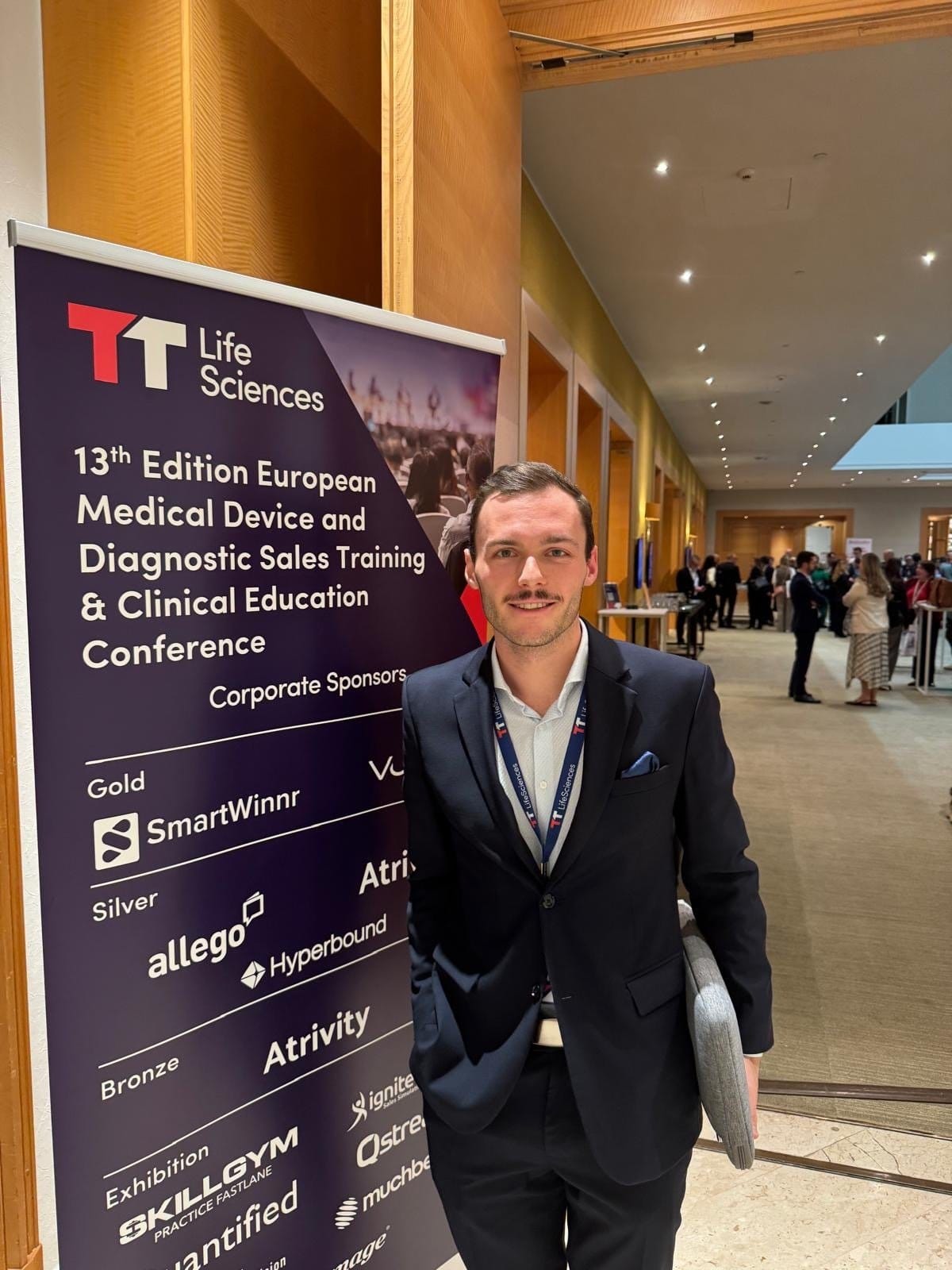
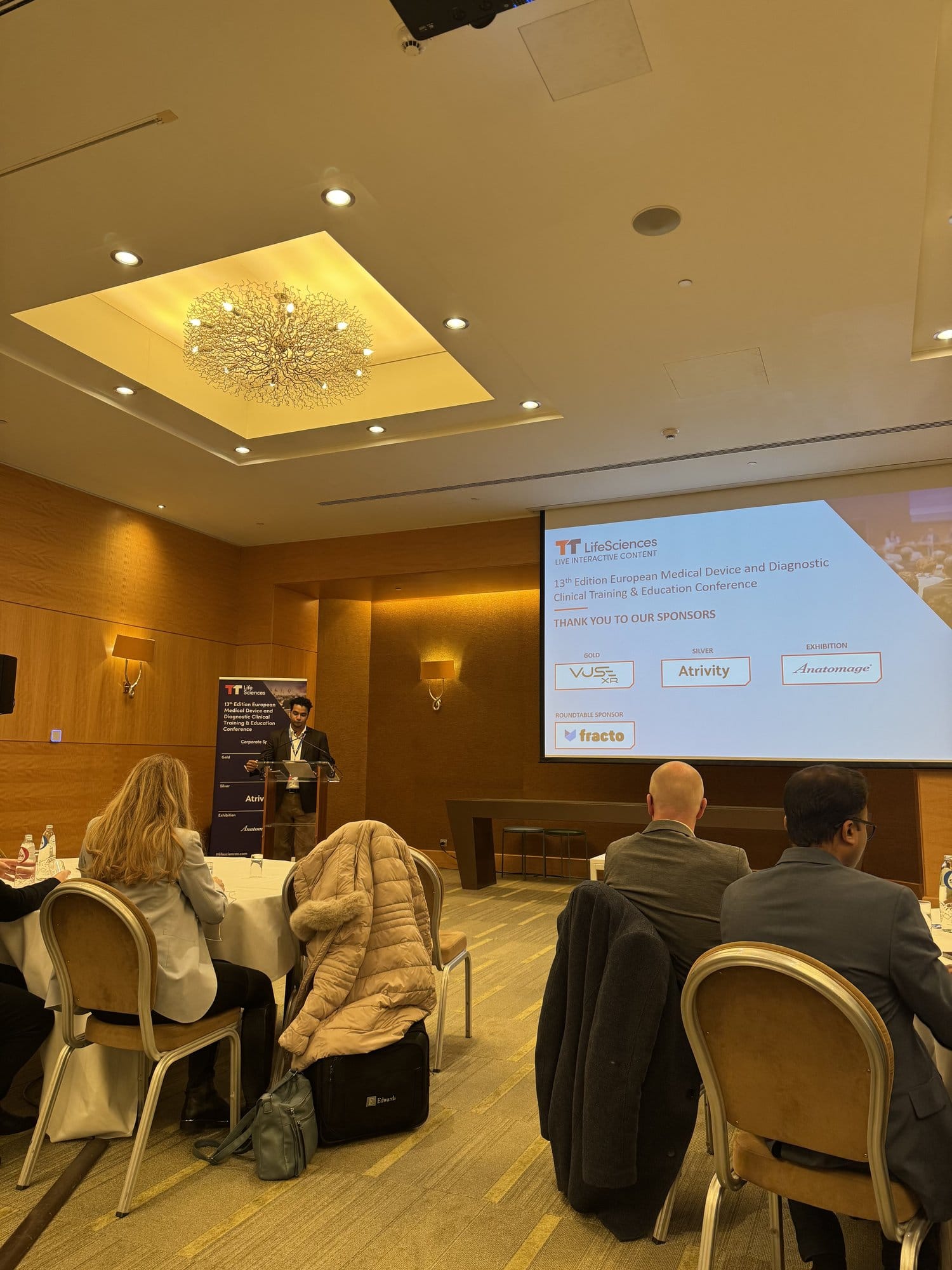
On 3 November 2026, I moderated the roundtable “Clinical Training Adoption Barriers” in Brussels. It was part of the TT LifeSciences conference. Nine participants from seven medical device companies joined the discussion. For 75 minutes, we looked at why good product training still fails to reach everyday practice.
- 7 out of 8 gave the statement about the first case three months later their highest score.
- 5 out of 7 also gave the statement about an outdated product version their highest score.
- Hands-on versus digital: a divided result, with a median of 3.
Eight votes, one clear concern
I opened with three statements and asked for an anonymous score from one to five. The strongest reaction was not to the question of digital or hands-on training. It came at a far more ordinary moment: the first real case three months after training. Seven out of eight participants gave the statement their highest score.
By then, the trainers have moved on and the materials have been sent. Whether the knowledge is still available at the point of need often remains unanswered. A training session can be memorable and still finish too early for everyday practice.
A second statement also drew strong agreement. Somewhere in the market, people are still being trained on an outdated product version. Five out of seven participants gave it their highest score. That is less a failure of the individual learner than a problem of distribution and updates.

Hands-on was not the opposite
The statement “Hands-on always beats digital” landed in the middle, with a median of three. The room was divided. That makes sense to me. Handling the device, supporting the first case and giving direct feedback still belong in practice. But audience selection, learning objectives, preparation, updates and follow-up should not have to wait for the next on-site visit.
The real problem often begins before training. The wrong people are invited, the learning objectives remain unclear or the preparation is missing. Afterwards, nobody owns the repetition, questions or new product versions. One approach discussed at the table was a community that participants can return to after the session.
The question is not digital or hands-on
My conclusion after 75 minutes: the right person needs the right product version at the right time. They also need to return to it later. Especially when the first real case begins and practice is all that remains of the training.
Brussels left me with one simple question: what helps on the training day, and what helps three months later? Both need to be planned from the start.
More information about the event is available from TT LifeSciences.